
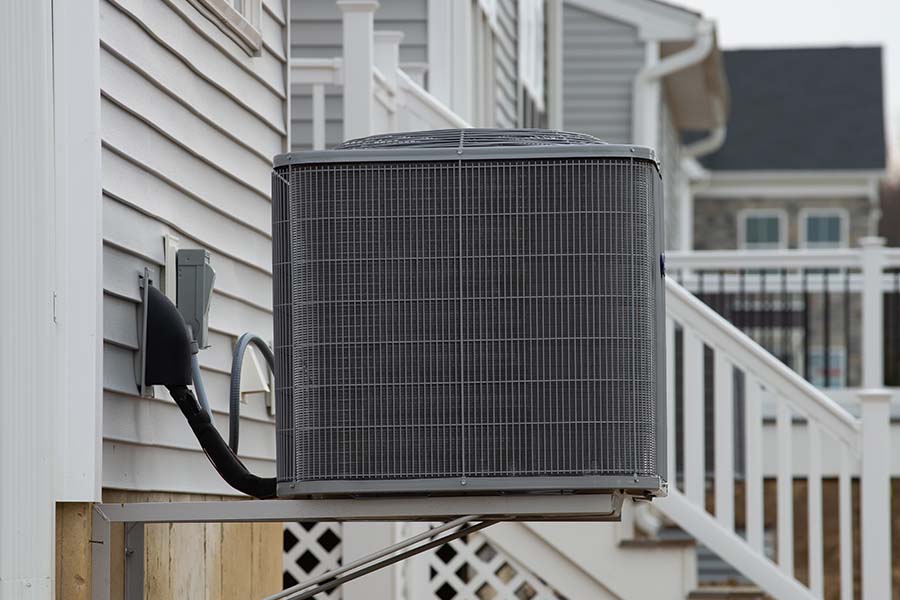
When an air conditioner starts showing signs of compressor trouble, the symptoms tend to follow a recognizable pattern: unusual sounds, uneven cooling, rising energy costs, repeated breakdowns, and a unit that’s simply been running for too many summers. For homeowners in Gilberts, where humid Midwest summers put sustained demand on cooling systems from June through August, catching these warning signs early can be the difference between a targeted repair and a full system failure during a heat wave. This guide covers the five most common indicators that an AC compressor may be nearing the end of its useful life.
Unusual Noises From Your AC Unit
An air conditioning system that’s operating correctly runs with a relatively consistent sound profile. When that changes, and clanking, buzzing, grinding, or hissing sounds start coming from the unit, it’s a reliable indicator that something mechanical has shifted.
Grinding noises in particular often point to compressor stress. The compressor is a high-pressure mechanical component, and when its internal parts begin to wear or fail, the sound is difficult to ignore. A high-pitched squeal may indicate a failing fan motor, while a persistent buzzing can signal electrical issues or refrigerant problems that are placing additional strain on the compressor.
In our service calls throughout Gilbert’s and the surrounding Kane County communities, we’ve seen what happens when unusual noises are dismissed as minor quirks. What starts as an intermittent clank can quickly become a full compressor failure within a single season. A prompt professional evaluation is the most reliable way to determine whether a noise represents a minor mechanical issue or the beginning of a more serious compressor problem.
If your AC unit is making unfamiliar sounds, reaching out to a certified technician sooner rather than later protects both the system and the household’s summer comfort.
Inconsistent Cooling Throughout Your Home
An AC system that cools some rooms effectively while leaving others warm or stuffy is doing more than creating discomfort. It’s signaling that the compressor may no longer be able to circulate refrigerant and move conditioned air with the consistency the system was designed to deliver.
The compressor’s job is to pressurize the refrigerant so it can absorb heat from indoor air and release it outside. When that component is underperforming, the entire cooling cycle is compromised. Rooms farthest from the air handler often feel the impact first, but the problem typically worsens as the compressor continues to degrade.
Homeowners in Gilbert often notice this pattern during the peak of summer, when outdoor temperatures along the Route 72 corridor climb and the system is running at maximum capacity. Signs worth monitoring include:
- Uneven room temperatures: Noticeable differences in comfort between floors or between rooms on the same floor
- Extended run times: The system runs for long periods without reaching the set temperature on the thermostat
- Short cycling: The unit turns on and off in rapid succession without completing a full cooling cycle
Airflow restrictions and dirty filters can contribute to uneven cooling. Still, when those factors have been ruled out, and the problem persists, the compressor is the most likely cause and warrants a professional assessment.
Increased Energy Bills With No Explanation
A compressor that’s struggling to perform draws more electricity to compensate. When cooling demand remains constant, but utility bills begin to climb without an obvious explanation, the compressor’s declining efficiency is often the cause.
Working in homes across Gilberts and the broader Randall Road corridor, we frequently find that homeowners have been absorbing higher energy costs for a full season or more before connecting those costs to their HVAC system. The pattern is straightforward: as a compressor loses efficiency, it runs longer and harder to achieve the same result, and that extra effort shows up on the monthly bill.
A few contributing factors that often accompany this pattern include:
- Refrigerant leaks: Low refrigerant levels force the compressor to work harder to maintain pressure throughout the cooling cycle
- Dirty coils: Buildup on the evaporator or condenser coils reduces heat transfer efficiency, adding strain to the compressor
- Aging components: Electrical components and motor windings inside the compressor wear over time, reducing mechanical efficiency even when the unit still appears to function
Scheduling an AC maintenance visit allows a technician to evaluate system efficiency, check the refrigerant charge, and determine whether the compressor is the source of increased operating costs before the situation escalates.
Frequent Breakdowns and Repairs
A cooling system that requires repeated service calls within a single season or across consecutive summers is no longer functioning reliably as part of home infrastructure. While individual repairs are a normal part of any mechanical system’s life, a pattern of breakdowns signals that the underlying problem has not been resolved and that the compressor itself may be failing.
The financial calculus on frequent repairs shifts quickly. A single service call to address a minor issue is straightforward. Still, when repair costs accumulate season after season, the total investment often approaches or exceeds what a compressor replacement or a new system installation would have cost from the start.
Based on what we see in Gilbert’s properties, homeowners who find themselves in a repeated repair cycle are typically dealing with one of two situations: a compressor that has reached the end of its mechanical life and is failing progressively, or a system that was never quite right and has been limping along on temporary fixes. Either way, a thorough professional evaluation is the appropriate next step.
An AC compressor replacement may cost more upfront than another repair. Still, for a system that has been breaking down consistently, it typically delivers more reliable performance and lower total cost over the following years.
Age of Your AC Compressor Matters
Compressor lifespan is one of the most straightforward factors in the repair-versus-replace decision. Under normal operating conditions and with consistent maintenance, most residential AC compressors are designed to last 10 to 15 years. A unit approaching or past that threshold should be evaluated carefully, even if it appears to be functioning.
Older compressors face a compounding set of challenges:
- Reduced mechanical efficiency: Internal wear affects the compressor’s ability to maintain proper refrigerant pressure, which reduces overall system performance
- Increased failure risk: Components that have been operating for a decade or more are statistically more likely to fail, often at the most demanding points of the cooling season
- Parts availability: Replacement components for older compressor models can be harder to source and more expensive to install
- Refrigerant compatibility: Systems manufactured before 2010 frequently use R-22 refrigerant, which has been phased out and is no longer produced, making repairs increasingly difficult and costly
For Gilbert’s homeowners with systems 10 years or older, the summer season is the right time to have a qualified technician assess whether the compressor has sufficient remaining life to justify continued investment or whether proactive replacement makes more practical sense.

Keeping Your Gilbert’s Home Cool All Summer Long
Summer in Gilberts brings the kind of sustained heat and humidity that puts real strain on residential cooling systems, from neighborhoods near the Gilberts Village Center to the developing corridors along Gilberts Road. An AC compressor that’s showing any of the five signs covered here deserves professional attention before conditions get worse.
Catching compressor issues early, whether that’s an unusual noise, inconsistent performance, climbing energy costs, repeated breakdowns, or advancing age, allows homeowners to make a planned, informed decision rather than responding to an emergency failure in the middle of a heat wave.
WeatherWise Heating & Cooling serves homeowners throughout Gilberts and the greater Kane and McHenry County area. Our NATE-certified technicians bring hands-on local experience to every service call, and we’ll give you a straightforward assessment of your system’s condition and what it will take to keep your home comfortable for the seasons ahead.
When you’re ready to have your compressor evaluated, contact our team today to schedule an appointment before the heat of summer arrives.