
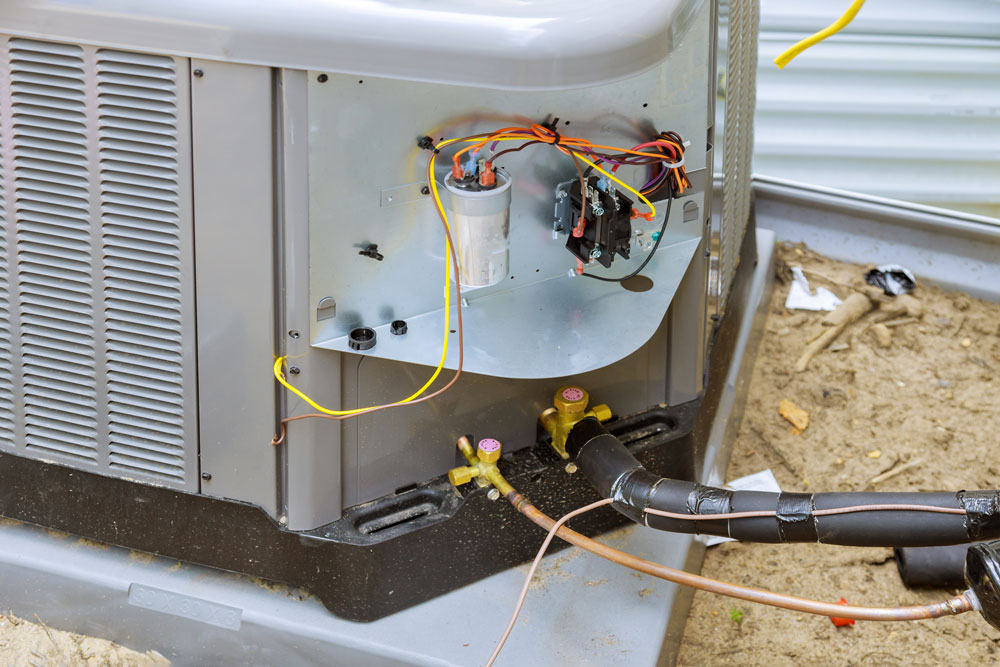
Troubleshooting AC electrical issues can feel like navigating a maze, but you can find your way out efficiently with a few key steps. Start by pinpointing common symptoms like unusual noises, inconsistent cooling, or unexpected shutdowns. Once you’ve identified these, check the power supply and the circuit breaker for any obvious faults. Don’t forget to test the thermostat and inspect the wiring; these components often go overlooked. If these steps don’t resolve the issue, you must dig deeper into the capacitor and compressor. But what if the problem persists?
Identify Common Symptoms
Begin by noting any unusual noises, inconsistent cooling, or unexpected shutdowns, as these are common symptoms of AC electrical issues. When you hear strange sounds, like buzzing or clicking, it often indicates electrical components malfunctioning. Pay close attention to the type of noise and its frequency. Documenting these details can be crucial for diagnosing the problem accurately.
Inconsistent cooling is another sign you need to watch for. If certain rooms in your home are not cooling as they should, it may indicate an electrical fault affecting the AC’s performance. Measure the temperature in various rooms to identify any discrepancies. If the cooling seems erratic, it’s likely an electrical issue within the unit’s control system.
Unexpected shutdowns are also red flags. If your AC unit turns off suddenly without any apparent reason, it could be due to electrical problems such as short circuits or faulty wiring. Ensure you track when these shutdowns occur and under what conditions.

Check the Power Supply
To address these symptoms, check the power supply to ensure your AC unit receives adequate and stable electricity. Begin with the basics: confirm the unit is plugged in securely. A loose plug can sometimes cause intermittent power, leading to erratic performance. Next, examine the power cord for visible damage, such as fraying or cuts. A compromised power cord can be a safety hazard and may disrupt the power flow.
Use a multimeter to measure the outlet’s voltage. Set your multimeter to the appropriate voltage range, typically 120V for most residential outlets. Insert the probes into the outlet slots and verify that the reading matches the expected voltage. If the voltage is significantly lower or absent, there may be an issue with the outlet itself or the wiring behind it.
Ensure the outlet is manageable with other appliances. Overloading can cause voltage drops, affecting the AC unit’s performance. If you find any issues, address them promptly, as a stable and sufficient power supply is crucial for the AC unit to function correctly. Always prioritize safety by turning off power at the main switch before making any repairs or adjustments.

Inspect the Circuit Breaker
Check the circuit breaker to ensure it hasn’t tripped, as this can prevent your AC unit from receiving power. Begin by locating your home’s electrical panel, typically found in a garage, basement, or utility room. Open the panel and look for the breaker labeled ‘AC’ or ‘Air Conditioner.’ If the breaker is in the middle position, it has tripped. To reset it, switch it to the ‘Off’ position and back to the ‘On’ position.
Ensure you’re standing on a dry surface and using one hand to operate the breaker to minimize the risk of electrical shock. If the breaker trips again immediately, a more serious electrical issue could need professional attention. In this case, contacting a licensed electrician is crucial to investigate further.
For consistent performance and safety, periodically inspect your breaker for signs of wear or damage, such as scorch marks or a burning smell. This proactive approach helps prevent electrical hazards and ensures your AC unit operates reliably.
Inspect the Circuit Breaker
Check the circuit breaker to ensure it hasn’t tripped, as this can prevent your AC unit from receiving power. Begin by locating your home’s electrical panel, typically found in a garage, basement, or utility room. Open the panel and look for the breaker labeled ‘AC’ or ‘Air Conditioner.’ If the breaker is in the middle position, it has tripped. To reset it, switch it to the ‘Off’ position and back to the ‘On’ position.
Ensure you’re standing on a dry surface and using one hand to operate the breaker to minimize the risk of electrical shock. If the breaker trips again immediately, a more serious electrical issue could need professional attention. In this case, contacting a licensed electrician is crucial to investigate further.
For consistent performance and safety, periodically inspect your breaker for signs of wear or damage, such as scorch marks or a burning smell. This proactive approach helps prevent electrical hazards and ensures your AC unit operates reliably.

Test the Thermostat
Ensuring your thermostat functions correctly is essential for maintaining the proper operation of your AC unit. Begin by setting the thermostat to a temperature below the current room temperature. Listen for a click indicating that the thermostat sends a signal to the AC unit. If you don’t hear a click, the thermostat might be faulty, and you should consider replacing it.
Next, remove the thermostat cover to inspect the wiring. Turn off the power at the circuit breaker to avoid any electrical hazards. Once the power is off, use a multimeter to check the voltage at the thermostat terminals. You should see a reading of approximately 24 volts AC. If there is no voltage, the issue could be with the transformer or the wiring leading to the thermostat.
Examine the Wiring
Before diving into the wiring, turn off the power at the circuit breaker to prevent any electrical hazards. This is crucial for your safety and to avoid damaging the AC unit. Once the power is off, visually inspect the wiring for any signs of wear, fraying, or corrosion. Check all connections to ensure they are secure and not loose or damaged.
Next, a multimeter is used to test for continuity in the wires. Set the multimeter to the continuity setting and place the probes on either end of each wire. A continuous beep indicates that the wire is intact and functioning correctly. Without a beep, the wire may be broken and needs replacement.
Look for any signs of overheating, such as melted insulation or burn marks, which can indicate underlying issues. Also, inspect the wire connectors and terminals for corrosion or looseness. Tighten loose connections with a screwdriver and clean corroded terminals using a small wire brush.

Assess the Capacitor
To assess the capacitor, disconnect the power supply and discharge the capacitor using an insulated screwdriver to ensure safety. This step is crucial to prevent electrical shock. Next, locate the capacitor near the compressor or fan motor in your AC unit. Carefully remove the capacitor from its mounting bracket, noting the wiring connections. Photograph the connections if needed for reference.
Place the probes on the capacitor terminals using a multimeter set to the capacitance setting. Compare the reading to the capacitor’s rated capacitance, typically printed on its side. A reading within 5-10% of the rated value indicates a functioning capacitor. If the reading is significantly lower or shows no capacitance, the capacitor is faulty and needs replacing.
Inspect the capacitor visually for any bulging, leaking, or corrosion, as these signs indicate failure. Reconnect the capacitor carefully, ensuring all wires are securely attached per your reference photo. Re-mount the capacitor in its bracket and double-check all connections.

Before diving into the wiring, turn off the power at the circuit breaker to prevent any electrical hazards. This is crucial for your safety and to avoid damaging the AC unit. Once the power is off, visually inspect the wiring for any signs of wear, fraying, or corrosion. Check all connections to ensure they are secure and not loose or damaged.
Steps for inspecting the wiring:
- Look for signs of overheating, such as melted insulation or burn marks.
- Check connectors and terminals for corrosion or looseness, tightening any loose connections with a screwdriver.
- Use a multimeter to test for continuity: Set the multimeter to the continuity setting and place the probes on either end of each wire. If you hear a beep, the wire is intact and functioning correctly.
Assess the Capacitor

Evaluate the Compressor
Start by turning off the AC unit’s power supply to safely evaluate the compressor’s condition. This step ensures you avoid electrical shocks and damage to the unit. Once the power is off, locate the compressor in the outdoor unit.
Next, visually inspect the compressor for any signs of damage, such as burnt wiring, oil leaks, or physical damage. If everything looks intact, use a multimeter to check for continuity across the terminals. Set the multimeter to the ohms setting and measure the resistance between the three terminals:
- C (Common) to R (Run)
- C (Common) to S (Start)
- R (Run) to S (Start)
The readings should be within the manufacturer’s specified range. If not, the compressor might be faulty. Listen for unusual noises when the compressor is running, such as grinding or clicking sounds, which could indicate mechanical failure. Ensure you follow safety protocols and use the right tools for each step.

Seek Professional Help
When you’ve exhausted your troubleshooting steps and still can’t resolve the issue, seeking professional help is crucial to ensure your AC unit is repaired safely and correctly. A certified HVAC technician has the specialized tools and expertise to diagnose and fix complex electrical problems that you might not be equipped to handle.
First, verify the technician’s credentials. Ensure they have the appropriate certifications and insurance to perform the work. This guarantees they adhere to industry standards and can handle potential hazards safely.
When the technician arrives, please provide them with a detailed account of your steps. This information helps them understand the issue faster and more accurately. Be present during their inspection to answer any questions and to learn about the repair process, which can be valuable for future troubleshooting.
Conclusion
By following these steps, you can efficiently troubleshoot AC electrical issues. You might think it’s too complex, but with this systematic approach, you’ll cover all bases safely. If symptoms persist, documenting your findings and seeking professional help ensures your AC’s integrity. Don’t compromise on safety—licensed technicians can provide accurate diagnoses and repairs. By taking these precautions, you’re ensuring your AC remains reliable and efficient.