

Keeping your home at a comfortable temperature can be a costly affair, especially if you live in an area with extreme temperatures. In this blog post, we will discuss a cost-effective and energy-efficient solution to keeping your home at a comfortable temperature: Heat Pumps.
We’ll explain how Heat Pumps work, the components of a Heat Pump, and the benefits of using a Heat Pump. We will also highlight the importance of choosing an ENERGY STAR certified Heat Pump installer to get maximum efficiency and savings. By the end of this article, you’ll have a better understanding of how Heat Pumps work and why they’re a smart investment for your home.
A Heat Pump typically consists of two units: an outdoor unit and an indoor unit. The outdoor unit houses the compressor and the heat exchanger, while the indoor unit contains the air handler and the evaporator coil. Refrigerant flows between the outdoor and indoor units, absorbing heat from the outside air and releasing it inside.
Why ENERGY STAR?
Heat Pumps that earn the ENERGY STAR label are independently certified to save energy, save money, and protect the climate. Electric Heat Pumps use the difference between outdoor air temperatures and indoor air temperatures to cool and heat your home. Unlike combustion heating systems that convert fuel into heat, air-source Heat Pumps move heat from the outside air to provide heating for your home. This method is so efficient that an Heat Pump can deliver up to three times more heat energy to your home than the electrical energy it consumes. Heat Pumps are a smart investment year-round as they can also provide cooling during the summer months, serving double duty and reducing the need for separate cooling systems. Learn more on the official Energy Star website.How do Heat Pumps work?
A Heat Pump is an electrically powered device that uses the difference between outdoor and indoor air temperatures to cool or heat your home. This device works by absorbing heat from the outside air and transferring it to the indoor air. During the summer months, the process is reversed, and the heat pump removes heat from the indoor air and releases it outside, thereby cooling your home. The Components of a Heat Pump
A Heat Pump typically consists of two units: an outdoor unit and an indoor unit. The outdoor unit houses the compressor and the heat exchanger, while the indoor unit contains the air handler and the evaporator coil. Refrigerant flows between the outdoor and indoor units, absorbing heat from the outside air and releasing it inside.
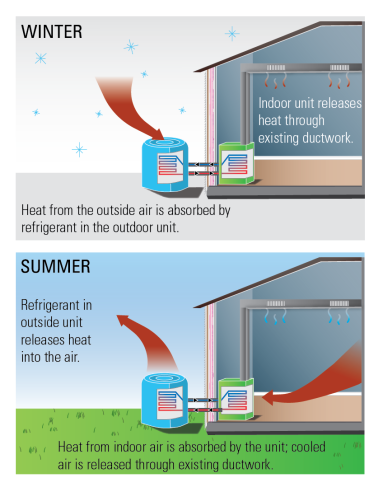 The Components of a Heat Pump
The Process of Heat Transfer
The heat transfer process in a Heat Pump involves four main stages: compression, condensation, expansion, and evaporation. The compressor raises the pressure and temperature of the refrigerant, causing it to become a hot, high-pressure gas. The heat exchanger then removes the heat from the gas, causing it to condense into a liquid. The liquid refrigerant then passes through the expansion valve, which reduces its pressure and temperature, causing it to evaporate into a gas. Finally, the evaporator coil absorbs heat from the indoor air, and the cycle repeats.Benefits of Heat Pumps
Heat Pumps are a type of renewable energy technology that can provide heating and cooling to buildings. Here are some of the benefits of Heat Pumps:- Energy efficiency: Heat Pumps are highly energy efficient and can provide up to 4 times as much heat as the energy they consume, making them an excellent choice for reducing energy bills and carbon emissions.
- Cost-effective: Heat Pumps can provide significant cost savings compared to traditional heating systems, especially in areas where electricity is cheaper than other fuels such as oil or propane.
- Renewable energy: Heat Pumps use renewable energy from the air, which means they are a sustainable and environmentally friendly option.
- Improved air quality: Heat Pumps don’t produce any emissions, which helps to improve the air quality both indoors and outdoors.
- Versatility: Heat Pumps can provide both heating and cooling, making them a versatile solution for year-round climate control.
- Easy installation: Heat Pumps are easy to install, especially compared to other heating systems like boilers or furnaces, and they require minimal maintenance.
- Long lifespan: Heat Pumps typically have a longer lifespan than traditional heating systems, which means they require less frequent replacement and can provide long-term cost savings.