
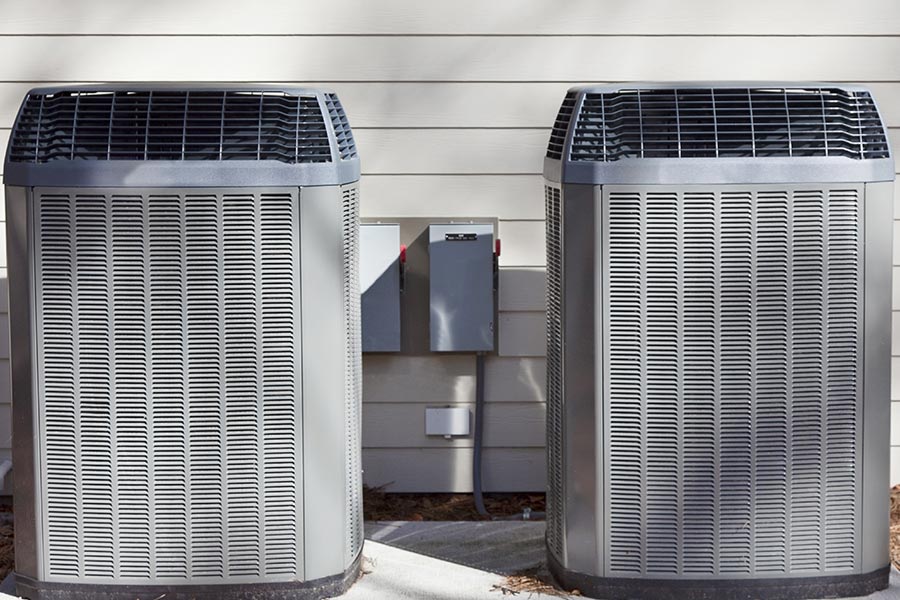
Heat pumps are unique among home comfort systems in that they handle both heating and cooling from a single unit, which means they are in active use year-round. When a heat pump stops turning on, the impact is immediate regardless of the season. In Crystal Lake, where summer temperatures climb into the upper 80s and winter lows can fall well below zero along the Route 14 corridor and into the outlying rural areas, a non-functioning heat pump is not something to leave unaddressed.
Some of the causes behind a heat pump that will not start are straightforward to identify, while others require a trained technician to diagnose and correct. Understanding what to look for helps you communicate the problem clearly and know when professional heat pump repair is the right call.
Dirty Air Filters Can Cause a Heat Pump To Not Run
Air filters are one of the most commonly overlooked factors in heat pump performance. A filter that has been in service for several months without replacement accumulates enough dust, debris, and particulate matter to significantly restrict airflow through the system. When airflow drops below the level the system needs to operate, the coils can freeze and the unit may shut itself down entirely as a protective response.
How Often Filters Should Be Replaced
For most Crystal Lake homes, a filter change every three months is the standard recommendation. Households with pets, heavy foot traffic, or older HVAC equipment may benefit from changing filters every two months. Homes near wooded or dusty areas, including those close to Three Oaks Recreation Area, tend to see filters load up faster than average. A clogged filter is one of the first things a technician checks when a heat pump is reported as not turning on, and it is one of the easiest issues to prevent with a consistent replacement schedule.
Thermostat Issues Are Common When Heating and Cooling Is Not Available
Before assuming the heat pump itself is at fault, the thermostat is worth examining carefully. Thermostat-related issues account for a surprising number of service calls where the system appears to have stopped working but is actually responding exactly as programmed.
Incorrect Temperature Settings
If the thermostat is set to a temperature that the home has already reached or exceeded, the heat pump has no call to activate. What can appear to be a system failure is sometimes a setting that was changed without the homeowner’s knowledge. Adjusting the setpoint a few degrees in the appropriate direction will confirm whether the system responds normally.
Emergency Mode Activation
Heat pumps in Crystal Lake are often equipped with an emergency heating mode designed for use during extreme cold, the kind of single-digit or below-zero temperatures that northern Illinois sees during a hard winter. This mode bypasses the heat pump’s standard operation and relies on auxiliary heat strips instead. If emergency mode has been activated during moderate weather, it can interfere with the heat pump’s normal startup sequence. Checking whether this setting is active and deactivating it when conditions do not require it is a simple step that can restore normal operation.
Tripped Circuit Breakers Can Stop Heat Pumps From Operating
Heat pumps draw significant electrical power, and the circuit breakers protecting them can trip under certain conditions. When a breaker trips, the heat pump loses power entirely and will not respond to thermostat calls.
Checking the Electrical Supply
The first step is confirming that the disconnect switch on or near the outdoor unit has not been turned off, which can happen during landscaping, yard work, or after a service visit if the switch was not returned to the on position. If the switch is on, the next step is checking the main electrical panel for a tripped breaker associated with the heat pump circuit.
When Tripping Becomes a Pattern
A breaker that trips once and stays reset after being reset may simply have responded to a momentary electrical event. A breaker that trips repeatedly is a different matter. Repeated tripping suggests the heat pump may be drawing more current than it should, which can indicate an overheating motor, a failing capacitor, or another internal issue that is creating an electrical overload. This pattern warrants a professional inspection rather than simply resetting the breaker again.
Broken Parts Might Prevent Heat Pumps From Starting
When the filters are clean, the thermostat is set correctly, and the electrical supply is confirmed, but the heat pump still will not turn on, the issue likely lies with a specific internal component. Several parts within a heat pump are known to fail and prevent the system from starting or operating normally.
Starting Capacitor
The starting capacitor provides the electrical boost the motor needs to start each cycle. A failed capacitor means the motor cannot initiate, and the system will appear completely unresponsive even when everything else is functioning. Capacitor failure is one of the more common repair calls our technicians handle throughout the Crystal Lake area, particularly after periods of heavy use during summer cooling season.
Reversing Valve
The reversing valve is what allows a heat pump to switch between heating and cooling modes. If this valve sticks or fails, the system may be unable to operate in one or both modes. A stuck reversing valve often manifests as a heat pump that blows air at the wrong temperature for the mode selected, or one that stops responding when switched between heating and cooling.
Blower Motor
The blower motor is responsible for circulating conditioned air through the duct system and into the living space. If the blower fails, air cannot move even if the heat pump’s refrigerant circuit is functioning correctly. The home will not feel the effects of heating or cooling, and the system may shut down on a safety limit if airflow drops too low.
Clogged Condensate Drain
Heat pumps produce condensation during normal operation, and that moisture is directed out of the system through a condensate drain line. When this drain becomes clogged, the resulting water backup can trigger a float switch that shuts the system down to prevent overflow and water damage. Clearing the drain restores normal operation, but the underlying cause of the clog should be addressed to prevent recurrence.
In our service calls throughout Crystal Lake neighborhoods including Willow’s Edge, Wedgewood, Four Colonies, and Alexandra, these component-level failures are among the most common findings when a heat pump has stopped turning on. A trained technician can identify the specific failure point accurately, avoiding the unnecessary replacement of parts that are functioning correctly.

Keeping Your Heat Pump Running Through Every Season in Crystal Lake
A heat pump that will not turn on is a problem that deserves prompt attention, but not every cause requires an emergency repair. Working through the most common explanations systematically, from filter condition and thermostat settings to electrical supply and component condition, often reveals the issue quickly. When the cause goes beyond what a visual check can identify, a professional diagnosis is the most efficient path to a reliable resolution.
WeatherWise Heating & Cooling serves Crystal Lake and the surrounding McHenry County communities with experienced, dependable HVAC repair. Our technicians are familiar with the demands that northern Illinois winters and summers place on heat pump systems, and we are equipped to handle repairs across all makes and models.
If your heat pump is not turning on and you are ready to have it properly evaluated, schedule your service today and we will get your system back to reliable operation.